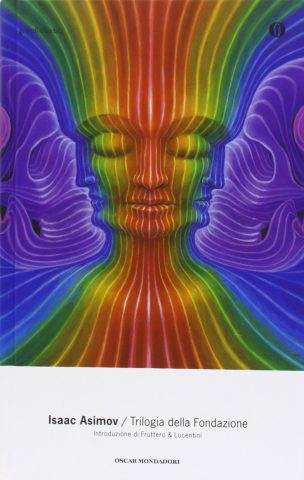
Isaac Asimov's Foundation Trilogy, originally published between 1951 and 1953, is a cornerstone of science fiction, honored as the "Best All-Time Series" at the 1966 Hugo Awards. The saga revolves around the brilliant mathematician Hari Seldon and his science of psychohistory, which predicts the collapse of the Galactic Empire and thirty thousand years of barbarism. To shorten this period to just a millennium, Seldon establishes the Foundation, an organization tasked with preserving knowledge and guiding humanity.
Originating as short stories in the magazine "Astounding Stories," the work is distinguished by an episodic structure that emphasizes large-scale historical and political forces over individual character development, exploring themes such as the fate of civilizations, scientific progress, and free will. In the 1980s, Asimov expanded the original trilogy with two sequels and two prequels, creating a cycle of seven novels that also attempted to connect his other narrative universes.



Reader comments
+ add commentNo comments yet. Be the first to write one!